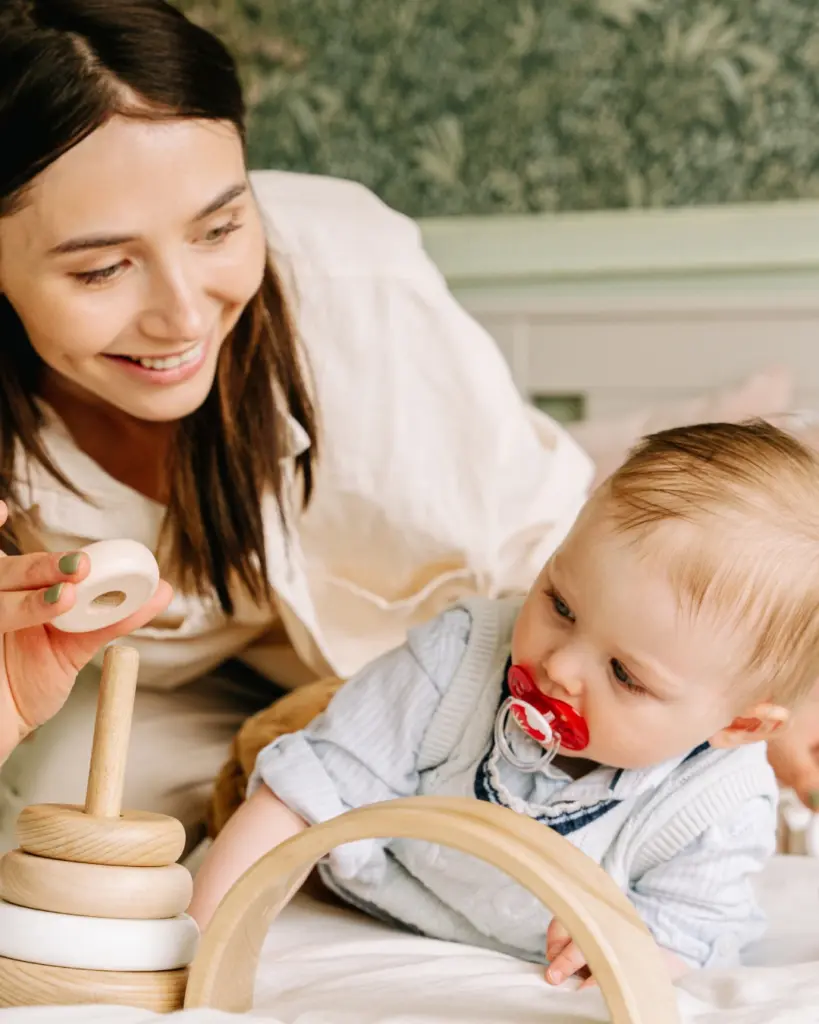
Pacifiers can be incredibly helpful for soothing, regulation, and early sleep but not all pacifiers support oral development the same way. At The Mouth Rehab, we take a functional approach: shape + duration of use matter and so does your baby’s feeding and breathing pattern. Here’s what to know about pacifier shape, tongue posture, intentional use and when to wean
Why Pacifiers Can Be Helpful
Pacifiers can support:
✔ Soothing & regulation
✔ Sleep in early infancy
✔ Short-term comfort during transitions
✔ Oral motor skill development (practice coordinating suction, lips and tongue)
The goal isn’t to avoid pacifiers. It’s to use them intentionally and to choose a shape that supports a more functional suck pattern.
Sucking Is a Reflex (Not a Preference)
In the early months, sucking is primarily a reflex, not a “preference.”
If a baby is unable to suck on a more functional pacifier, it’s not always because they “don’t like it.” Sometimes it’s because it’s hard to manage.
If we see consistent difficulty with:
✔ preferred pacifiers (especially functional shapes)
✔ breastfeeding
✔ bottle feeding
…a functional feeding assessment may be warranted to understand what’s making sucking feel challenging (coordination, endurance, tension, tongue function, etc.).
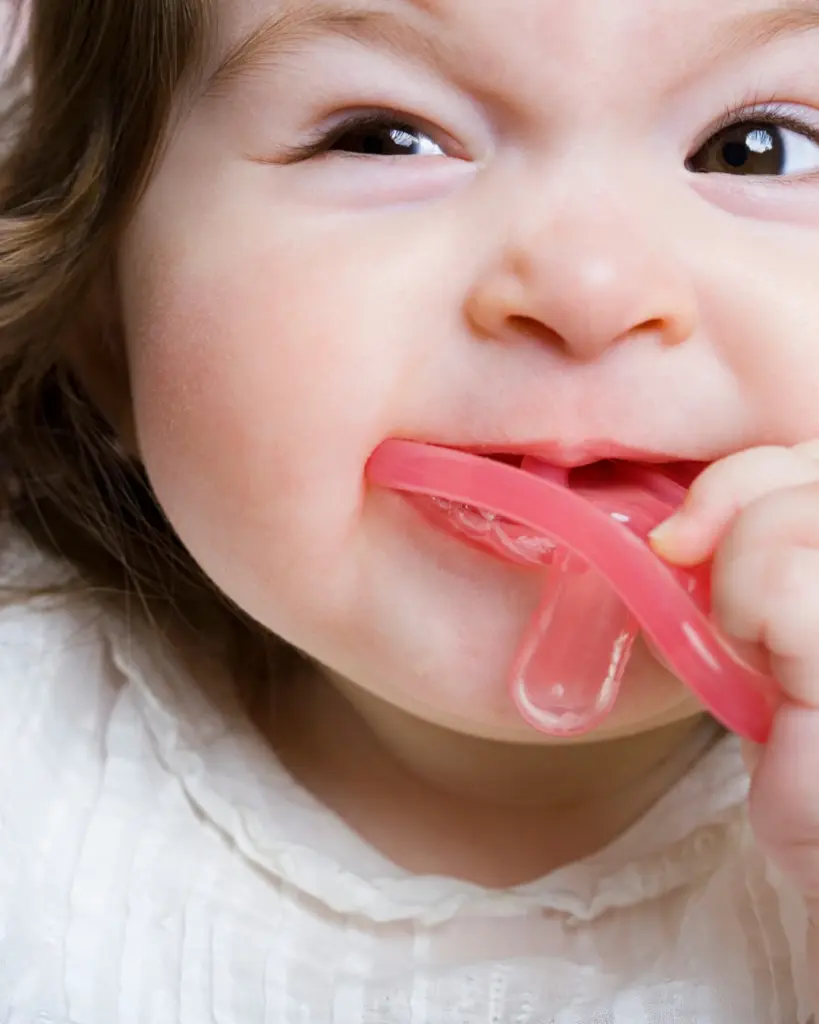
Pacifiers We Prefer (and Why)
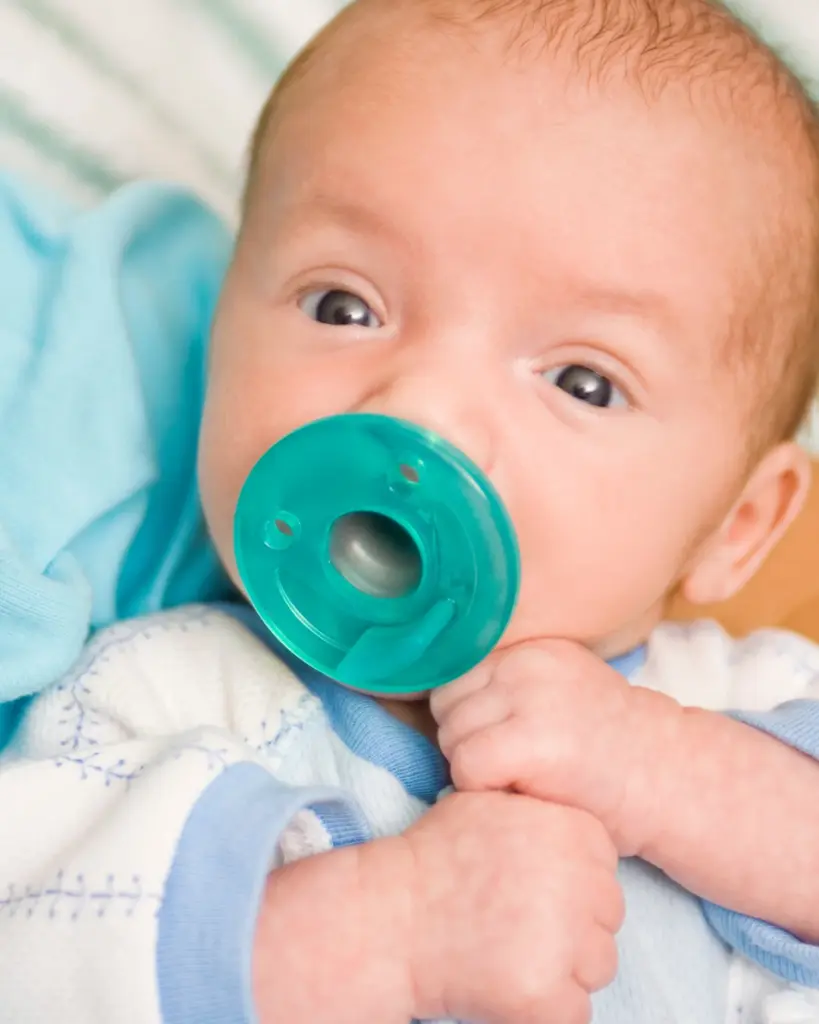
We generally prefer nipple-shaped pacifiers that allow the tongue to elevate and cup (rather than being pushed down).
Pacifiers we often prefer:
✔ Avent Soothie
✔ Nanobébé
✔ Ninni
✔ Momi
These shapes may better support:
✔ Tongue-up posture
✔ Lip closure
✔ A more functional suck pattern
✔ Tongue cupping (instead of constant compression)
Why it matters: the tongue is designed to rest gently on the palate (roof of the mouth). Pacifier shapes that allow tongue elevation can align more closely with that natural pattern.
Pacifiers We Don’t Prefer (and Why)
We’re typically less enthusiastic about bulbous or “orthodontic” pacifiers (common examples include MAM, Bibs, Nuk, Tommee Tippee and similar shapes).
These shapes can sometimes:
✔ push the tongue down
✔ encourage low tongue posture
✔ increase oral compensation (extra jaw/lip tension)
✔ place repeated pressure on the palate over time (especially with frequent/prolonged use)
Important note: This is not about shame or “never.” Many babies use these without obvious issues. We’re simply choosing shapes that are more development-forward when possible.
Use Pacifiers Intentionally (The Habit Matters Most)
Even a great pacifier can become a problem if it’s always in.
Pacifiers are meant to soothe, not stay in the mouth continuously. When your baby is calm or asleep:
✔ gently remove the pacifier
✔ allow lips to close
✔ support replacing it with a tongue-up rest posture when possible
This supports healthier oral posture, yes even during sleep and can reduce reliance over time.
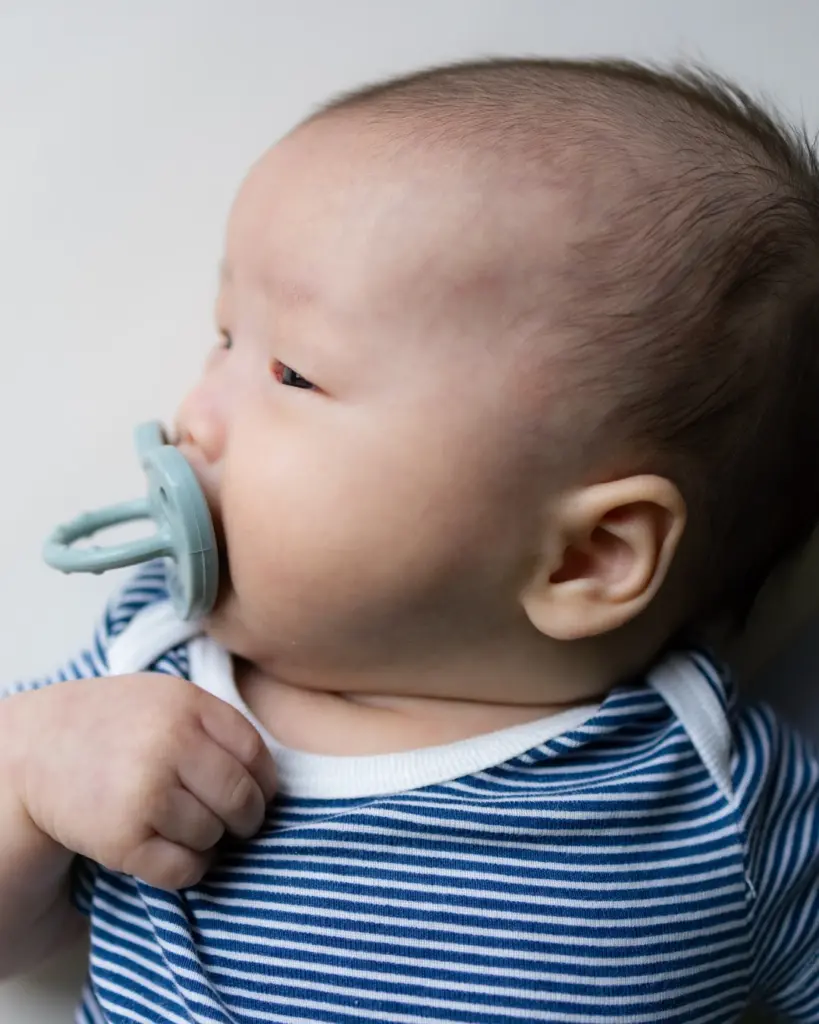
A Gentle Technique We Like
Sleeping Tongue Posture Hold
Inspired by Michelle Emanuel’s work, this gentle hold aims to support:
✔ tongue-up resting posture
✔ nasal breathing
✔ reduced reliance on the pacifier
This should always be gentle and supportive. We recommend learning it from a trained provider to ensure it’s appropriate for your baby and your specific goals.
When to Wean a Pacifier
Around 6 months is often an ideal time to begin weaning (for many babies), because:
✔ oral motor skills are advancing
✔ babbling & sound play increase
✔ feeding skills are developing
✔ tongue posture becomes more establisheded
✔ you’ve had that “this might be part of the puzzle” feeling for a while
This doesn’t mean every baby must be fully weaned by 6 months. But if you’re looking for a developmentally supportive target, it’s a strong window to start transitioning.
Signs Your Baby May Be Ready
✔ pacifier use is mostly for sleep (not all day)
✔ baby can self-soothe in other ways (routines, movement, touch)
✔ solids are starting and oral exploration is increasing
✔ you’re noticing “always-in” patterns you want to shift
Common FAQs
What if my baby only takes one specific pacifier?
That’s common. If your baby struggles with more functional shapes (like Ninni) especially alongside feeding challenges, it may be worth exploring why.
Can pacifiers cause speech delays?
Pacifiers don’t automatically cause speech problems, but prolonged all-day use beyond infancy can reduce opportunities for babbling, sound play, and oral exploration.
What if we’re not ready to wean yet?
That’s okay. Often the first step is intentional use + improved shape, then a gradual wean that fits your baby and your family.
Not sure which pacifier is best or when to wean?
At The Mouth Rehab, we support feeding, oral development, and habits through a functional lens, so you’re not guessing. You can shop our preferred pacifiers anytime through our Amazon Storefront. We’ve curated the exact shapes we recommend to help support healthy oral development and more functional sucking patterns.
✨ Complimentary discovery calls available